Tuesday, March 27, 2012

Introducing TED-Ed

If you haven't seen it yet. The folks who bring us the great TED Talks have created a TED-Ed YouTube Channel. This channel will serve up great lessons by great teachers. Learn more by watching the video below and exploring the lessons currently available on their channel page.


The potential here is tremendous. Great lessons brought to life by enthusiastic teachers and talented animators. These videos could become Khan Academy 2.0.

Nominate an Educator
Nominate an Animator
Suggest a Lesson

Friday, March 26, 2010

If Video Killed the Radio Star, Will the iPad Kill the Printed Book?

Yesterday morning one of my 6th grade advisory students asked me what the next big thing in technology would be. I just happened to have my latest issue of MacWorld sitting on my desk with a picture of the iPad on it claiming it to be a "revolutionary" tablet. I boldly replied to her question that the iPad is the most exciting thing coming out and that it would be out in just over a week.


As I was talking about the iPad one of my favorite trivia questions popped into my head. The question is what is the first music video ever shown on MTV? Of course in my discussion with these 11 year olds I had to teach them about the fact that MTV originally showed music videos all day as opposed to the reality mix they show today. Of course these students also thought that MTV had just been around "forever" since it launched in 1981 and they were born in 1998 (feeling really old now?). The answer to the trivia question of course is the song "Video Killed the Radio Star" by The Buggles. Enjoy the music video.


Now my students were really confused... so I started to tell them my thoughts on the iPad and how I feel it will affect print media. I have thought for a long time that I would never see the end of the printed book in my lifetime. I have always felt it would be something that my children would see but not me. The release of the iPad is a huge step towards the death of the printed book and makes me think I just might see this in my lifetime now. People have gotten used to the idea of carrying their music around with them wherever they go. They will soon be able to do the same with their book collections using the iPad. Unlike my collection of books that fill the bookshelves in my home and a shelf at work I could have all my books together and most importantly searchable as they are digital. This device will revolutionize how people interact with the written word.

I know that many people are in love with the concept of curling up with a good book and the tactile joy of holding it in your hands. I've also been told that the smell of a book is another alluring feature. I personally feel that people will get over these issues and find the convenience of electronic books much more powerful. The other issue will become the economics of electronic books. As more and more people engage in the purchasing of electronic books the prices will fall. The expense of printed books will not allow publishers to make enough profits and force them to cease printing books to remain solvent.

My only question as I think about this is why will we need publishers when anyone can publish? How will the removal of print books democratize publishing. This is not that dissimilar to the music industry and independent bands. What are your thoughts?

Tuesday, March 2, 2010

Who Is The Best Teacher You Ever Had? Why?

Katherine Schulten recently wrote an article for The Learning Network in the New York Times, "Who is The Best Teacher You Ever Had? Why?". I found the comments to this post tremendously interesting.


I used to do an activity in my course for pre-service Elementary Education students asking them to think about the two best teachers they ever had. After giving them a few minutes to think of those great teachers and the qualities they possessed that made them great I asked each student to give a quick talk about one of the two.

After completing this discussion we talked about the similarities these teachers had. Typically the discussion centered around these characteristics:
  • Demanding
  • Caring
  • Passion
  • Supportive
  • Fostered Critical/Innovative Thinking
Many of these characteristics were detailed in the comments of the post mentioned above. What I found most interesting (since it was a technology course) was what happened next. I then asked them to think about their two teachers again and raise their hand if either of them used technology in their teaching. On average one to two hands (out of typically 20 students per class) would be raised. This translates to me that many of our young future teachers do not equate technology use being part of "good teaching".

I found this theme to continue as I worked with these college students over the course of each semester as I met resistance to the idea of using technology to reach all learners. These students see technology as a social tool (Facebook, IM, texting, YouTube, etc.) - not a learning tool. Over the course of the semester they tend to slowly change their thoughts about this concept. I have found that most teachers use the modeling they received as students to mold the style of teacher they will become. Will these younger teachers carry us forward in the advancement of 21st Century Skills?


Image Attribution:
Image: 'write like the wind'
http://www.flickr.com/photos/64503058@N00/2199226160

Thursday, January 21, 2010

How Secure Are Your Passwords?

As we use more and more online services, we use passwords on a regular basis. How hard would it be to 'hack' into one of your accounts?

The New York Times has a great article about password security, "
If Your Password is 123456, Just Make it HackMe".

Is your password on the list of most popular passwords? Or is it something like your initials or first name?
Do you use a combination of letters (upper and lower-case) and numbers in your passwords for extra security?

Some password tips:

Use a random word that you'll remember and substitute numbers and/or symbols for some of the letters.
I attended Boston University which has the viscious Terrier as it's mascot. I could use 't3RR!3r' as a password.

or

My favorite song is "You Picked a Fine Time to Leave me Lucille" (sorry for putting that song in your head). I could create an acronym for this set of lyrics. 'yp@ft2lmL' would be hard to forget but even harder to guess.

Image Attribution:
Image: 'locking nothing'
http://www.flickr.com/photos/53611153@N00/443924168

Friday, July 17, 2009

What Will You Do This Year?

I took a course this week on Digital Storytelling. My project for this course is posted below. I created it for use with the faculty at Frank Harrison Middle School as they begin the upcoming school year.

Enjoy.

Thursday, May 28, 2009

Google Study Tips for Students

Google has posted a great page of tips for students to use as they complete their research. This is a great resource and is tremendously useful for teachers as well.

Once you have read the tips on this page make sure you check out the 15 second search tips the Google Team has added to YouTube. You may also want to start following the Google Student Blog.

Wednesday, May 13, 2009

To Twitter-finity and Beyond!

Astronaut, Mike Massimino, is the first person to ever post to the popular micro-blogging service Twitter from space. He's currently on the space shuttle Atlantis heading to make repairs to the Hubble Space Telescope.

You can follow Mike Massimino on Twitter by his username, Astro_Mike.

Apparently, he does not have his Blackberry with him on Atlantis. He often posts to Twitter with it using Twitterberry. Those roaming charges were probably too much to handle. This post was done from the Twitter web site.

Thank goodness there wasn't a fail whale out when he posted!

Thursday, April 16, 2009

It's the Little Things We Do and Undiscovered Talent

Many years ago I taught middle school math in a small K-8 school in Central Maine. Each year our 8th grade students had a ceremony that celebrated their transition from this K-8 building into the high school. It resembled a high school graduation in many ways (although no one in the school dared to call it one but that is a conversation for another day) including speeches by some of the top students.

One of my last years teaching in that school I found myself listening to Nick, one of my students, give a speech about his years in this building. In his address he noted me particularly for being a caring teacher who looked out for his students. My initial responses to this statement were pride and joy that Nick felt that way and expressed it in this venue. One of the examples he cited was a situation earlier in the year when I called his house when he was injured playing with some friends to see how he was doing. At the time I didn't see this phone call as a tremendous feat of caring. I really didn't think much of it at all. I just wanted to make sure he was ok, find out if he knew when he'd be returning to school and to see if he needed anything from school.

As I thought about Nick's statements my pride and joy turned to anxiety. I started thinking about how many little interactions had I shared with students that I didn't think much about that were not so positive? It really hit me how powerful my interactions, as an educator, are with students. It really is a matter of all the little things we do that makes all the difference in the world. From that day on, I have tried to be more careful of quick flip responses and how I interact with students (as well as other teachers).

Now... why am I writing a blog post approximately ten years later about Nick and his 8th grade speech?

I read a great post today by Scott McLeod about Paul Potts and Susan Boyle who have shown tremendous talent at later ages on the hit show, 'Britain's Got Talent.' In the post Scott writes...

As schools and societies, we often fail to create the conditions in which talent can be nurtured, recognized, and utilized.
Reading this made me think about the little things we do (and don't do) with kids and how so many students can slip through the cracks - flying under everyone's radar like Potts and Boyle. Let's reach out to the Nick's of the world and look carefully for those little things that happen everyday as students show up glimpses of their talent.

No Daily Bookmarks for You

I decided to stop automatically posting my links from my Diigo account to this blog. If you'd like to follow my Diigo bookmarks you can subscribe to the feed for my account. I have been writing more to my blog lately and find it annoying to weed through the daily bookmark posts.

I added a sidebar widget that will display the last 5 sites I have added to Diigo if you visit my blog page.

Wednesday, April 15, 2009

My Daily Bookmarks 04/16/2009


Posted from Diigo. The rest of my favorite links are here.

Teaching Parents About Facebook and Internet Safety

About a month and a half ago I was asked by our PTO to host a viewing of Growing Up Online by PBS Frontline and facilitate a discussion after. The session was attended by approximately a dozen parents who were interested in learning more about keeping their children safe online. We had some great discussions about the program and what some of these parents were doing with their children.

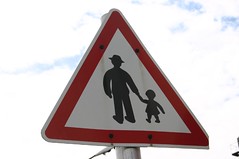
My message to parents about keeping their children safe online is fairly simple. Parents in my community are a large part of their children's offline lives. I push them to become as much a part of their children's online lives. I use the analogy of the Internet being very much like a large city (plenty of places and people you'd be ok with them getting to know and many you'd like to keep them far away from). I don't know any parents who would just drop their children off in the middle of a large city in the morning telling them "have a good time today... I'll pick you up at 8pm." They also would never allow a friend "to show them the ropes" either. Why on earth would they allow that to happen on the Internet? I feel that parents need to get involved with online services like chat, social networking, etc. so that they can communicate with their children in these arenas. Otherwise their children's online lives become a private place where their parents do not belong. If you bring your children to these online services and teach them how you'd like them to use them at a young age (legal age for Facebook is 13) it will not be something that they will push you away from. If a parent never disciplined a child until he/she was 15 they'd have some real problems. Not being part of their online lives until their children are immersed in these worlds is very much the same. Parents do need to allow their children to grow and slowly allow them more freedom with their online lives as they get older (just like they do offline).

So back to my evening with the PTO...

As I was speaking with some of the parents after the PTO meeting, I got the idea of holding another night to help parents become acquainted with social networking. My co-workers in the district (Alice Barr and Cathy Wolinsky) and I developed a plan for our evening and put it out to the parents. We held this evening session on Monday night and it was absolutely amazing. We had approximately 35 parents show up for our session on setting up an account on Facebook. We wanted to appeal to parents who were not comfortable getting started on their own so we kept the goals for the night fairly simple. We taught them how to:

  • Set up an account
  • Add friends
  • Set privacy settings they were comfortable with
  • Join a group for parents in our town (we planted that one with one of the parents)
We piled all of these parents into one room and everyone was on a computer so it was very hands-on. While they were learning how to navigate around the Facebook site they helped each other wonderfully and had great conversations about their thoughts regarding their children using these sites.

Alice, Cathy and I were clear right from the beginning in our motives for holding this event. We find that many parents are not involved in social networking and get caught up in the media frenzy surrounding these sites and their children's safety. We wanted to make them comfortable with Facebook so they could make good decisions about how they want to proceed with their children - not just deny their children access out of fear of the unknown. We were clear that we don't have all the answers. This is parenting at its best and there is no one solution that will work for all kids. We had a great mix of parents with children ranging from elementary through high school ages. This mix allowed for some great interaction for parents who are already in the middle of it all and parents just getting the questions from their children about becoming involved in the online world.

Here's the list of resources we shared with the parents who attended this session:

Thoughts on Facebook - Cornell University
All in the Facebook Family: Older Generations Join Social Networks - CNN
100 Awesome Facebook Apps for Productivity and Learning - Select Courses
How to Survive the New Facebook - Mashable
Facebook for Parents - Common Sense Media
10 Privacy Settings All Facebook Users Should Know - AllFacebook.com

Image Attribution:

Image: 'Street Sign II'
www.flickr.com/photos/98652633@N00/38356334

Tuesday, April 14, 2009

Wednesday, April 8, 2009

Tuesday, April 7, 2009

My Daily Bookmarks 04/08/2009


Posted from Diigo. The rest of my favorite links are here.

Monday, April 6, 2009

Are You a Social Media Snob: My Response

First of all I must say that I never thought that my post would get picked up the way it did. I am absolutely floored by the tremendous conversation that has taken place in the past week over my post, "Are You a Social Media Snob if You Do Not Follow Many People on Twitter." I really enjoyed reading the views of everyone who commented on the post. I especially would like to thank the folks that were mentioned in the post that took the time to leave a comment (Dean Shareski, Lee Kolbert, Vicki Davis, Liz Davis, Kevin Jarrett (you are not the first to tell me I'm all wet ;-)), Lucy Gray, and Mike Sansone).

I found some interesting threads in the conversations that took place in the comments and would like to elaborate on the following:

  1. Twitter should be used as each person wants to use it.
  2. Most educators tend to follow others.
  3. I'm not calling anyone a snob.
Probably the most echoed comment was that Twitter, like any other tool, should be able to be used as any individual sees fit. I couldn't agree with this more. I didn't write this post with the intent to create a set of rules that I felt educators (or anyone else) should follow when it comes to who they follow on Twitter. I feel that you get out of Twitter what you put into it. The more people you include in your professional learning community the more info you'll get from it. The more you contribute and help others the more will help you. It really is a matter of you scratch my back, I'll scratch yours.

Between what I posted in this post and "My Twitter Evolution" post I've made it pretty clear how I follow people on Twitter. I will follow most people who follow me on Twitter except for:
  • Bots
  • Marketers
  • Spammers
  • People who use offensive language (I read this at school too)
  • People in the adult entertainment industry
I have found some folks get a little annoying with too many posts that are not what I'm looking to read. I love Vicki Davis' idea of taking a "tweetcation" from them for a while.

The ability to personalize my use of Twitter is a big part of the draw for me. I don't mind some posts about people's personal lives because it helps me get to know them as an individual - not just professionally.

I hope that no one on the list felt that I was calling them a snob (despite the title of the post). I must say that the two individuals at the top of the list have contributed greatly to my work. I remember the first time I saw David Warlick speak at the Christa McAuliffe conference in 2004. I quickly ordered his "Redefining Literacy for the 21st Century" book as well as some his other works over the past few years. I have used (and suggested to many other educators) several of his resources on the web. I don't know of anyone in the edtech community that gives as much for free. His blog, podcast, and vast array of web resources demonstrates his dedication to the edtech community. I have also had the privilege to see Will Richardson present on multiple occasions. David and Will are the first two individuals I started following when I first set up my Bloglines account several years ago. I have really enjoyed reading their thoughts and stories over the years. If you haven't read Will's book, "Blogs, Wikis, Podcasts and Other Powerful Web Tools for Classrooms" you really should give it a look.

Despite my high level of respect for these two individuals I really find their Twitter numbers confusing. They both are champions of professional learning networks and demonstrate Twitter to thousands of educators every year but follow very few people. I think I mostly agree with Lucy Gray's comment,
"I guess I shouldn't be judgmental about other Twitterers (who really knows their circumstances and motives), but I am somewhat. I do think that if people are in the public eye with this stuff and are already tweeting, they should consider how they are staying in touch with the people that admire their work. We all should be learning from each other!"
I don't have a problem with the fact that neither of them follow me (there are plenty of people out there that contribute more to Twitter than I do). I just question why they follow so few. As I mentioned above, I don't believe there should be "rules" to Twitter use so I'll just chalk it up to them both using the tool as they see best.

Thanks again to eveyone in my professional learning network for making this conversation so rich.

My Daily Bookmarks 04/07/2009

Friday, April 3, 2009

Are you Making it Easier or Harder to Use Technology?

I was attending a meeting today with a bunch of tech coordinators discussing extending Maine's laptop initiative into high schools. I always find these meetings really interesting. The technical people always want to discuss security of networks, locking down users' privileges and making it difficult for those little angels to screw up their machines.

One of the representatives from Apple Computer mentioned that Apple gives it's employees full access to their equipment (yes administrative access). It made me think about what I do as a technology leader in my building. I seem to have a different view of my role from some of the others in this meeting today. I see my role as one that removes the barriers from teachers and students to technology - not creating hurdles that they must jump over to get to the learning. Is it more important to have the most secure network and equipment or to have people pushing the envelope and doing great things with the technology? I'd rather see teachers spending their time planning innovative projects that use technology to improve learning for all learners than trying to figure out how to get around all the locks on their machines and the network.

If you're a teacher I hope you have a technology department that supports your ideas of using technology to improve student learning.

If you're a technology leader I hope you strive to remove the barriers between your teachers and their technology use in the classroom. If nothing is happening on your networks and machines it really doesn't matter how secure you are.

Image Attribution:

Image: 'Cardinal Health picnic'
www.flickr.com/photos/9031691@N08/2777266738